
You are NOT the Hero. It is NOT Your Journey… It’s All About Your Audience
Part 3 of The Intentional Visibility Project: An 8-Part Series on Strategic Visibility for Accomplished Women Over 50
Previously: In Part 2, we explored how to build an architecture of visibility that lasts, using the Fibonacci spiral as our guide, expanding layer by layer on what we’ve already created.
A few weeks ago, I started writing about intentionality. Then architecture. What I didn’t realize until I sat down to write this piece is that I’d accidentally created a series.
First, you need clarity on who you are. What you’ve accomplished. What you already have. You need to come home to your own story before you can share it with anyone else.
Then, and only then, are you ready for this part. The part where you step into understanding who you serve and why.
This is my version of the hero’s journey… it picks up after everyone has moved on to the next thing.
But First, Here is What Everyone Gets Wrong
They think they’re the hero.
They’re not.
Your audience is the hero. You’re the guide who’s already been on that journey.
You’ve already faced the dragon. You’ve already earned the wisdom. You’ve already come home changed.
That is covered in the first part of the work, the part that is all about YOU.
Now your job is to help your audience come home.
This isn’t semantics. This is the difference between strategic visibility that builds lasting relationships and random acts of marketing that exhaust you while producing nothing.
What Changes When You Flip the Story
When you think you’re the hero:
- You perform
- You sell
- You push
- You chase vanity metrics
- You look for the quick fix
- You wonder why nothing sticks
When you understand your audience is the hero:
- You listen first
- You guide
- You connect
- You build unshakable foundations
- You do the deep work together
- You create strategic visibility that lasts
Most people don’t want to do this work. They want the shortcut. The hack. The seven-step formula that promises results by Friday.
But here’s what I’ve learned after years of guiding accomplished women through this process: there is no version of sustainable strategic visibility that doesn’t start with deeply understanding your audience.
Not demographics. Not buyer personas. Not “Mary the Manifesting Entrepreneur.”
Understanding where they are on their journey. What they value. What they’re seeking. Where they’re stuck. What they need to hear from someone who’s already been there so they can find their own answers.
Here’s a Little Story
Last night, I went to dinner with a good friend who’s a teacher. She has no connection to the online world. When I talk about my work, she glazes over. So I rarely share what I do.
But last night was different.
I didn’t share about the work. I shared about my clients and what they do.
She clung to every word. She wanted to know more. She cared about their stories. And then—only then—did she ask how I help them.
Then she said… “You really do love this.”
She’s been wondering for 20 years when I would get a real job. She needs the stability of a paycheck every two weeks and could never understand the risk and ups and downs of being an entrepreneur.
Then she asked: “You cannot do anything else, can you?”
I responded: “No, I cannot.” She now understands me at a different level, one she could never connect with because she could not see it.
That is what happens when you flip the story.
When you make it about them, the heroes on their journeys, everything changes. Even people who’ve never understood your work suddenly get it. Because you’re not talking about the HOW. You’re inviting them to meet the REAL people. On REAL journeys. That you understand because you’ve been there.
Your Audience Isn’t Who You Think
Here’s where most people get stuck in a swirl. They think “audience” means potential clients.
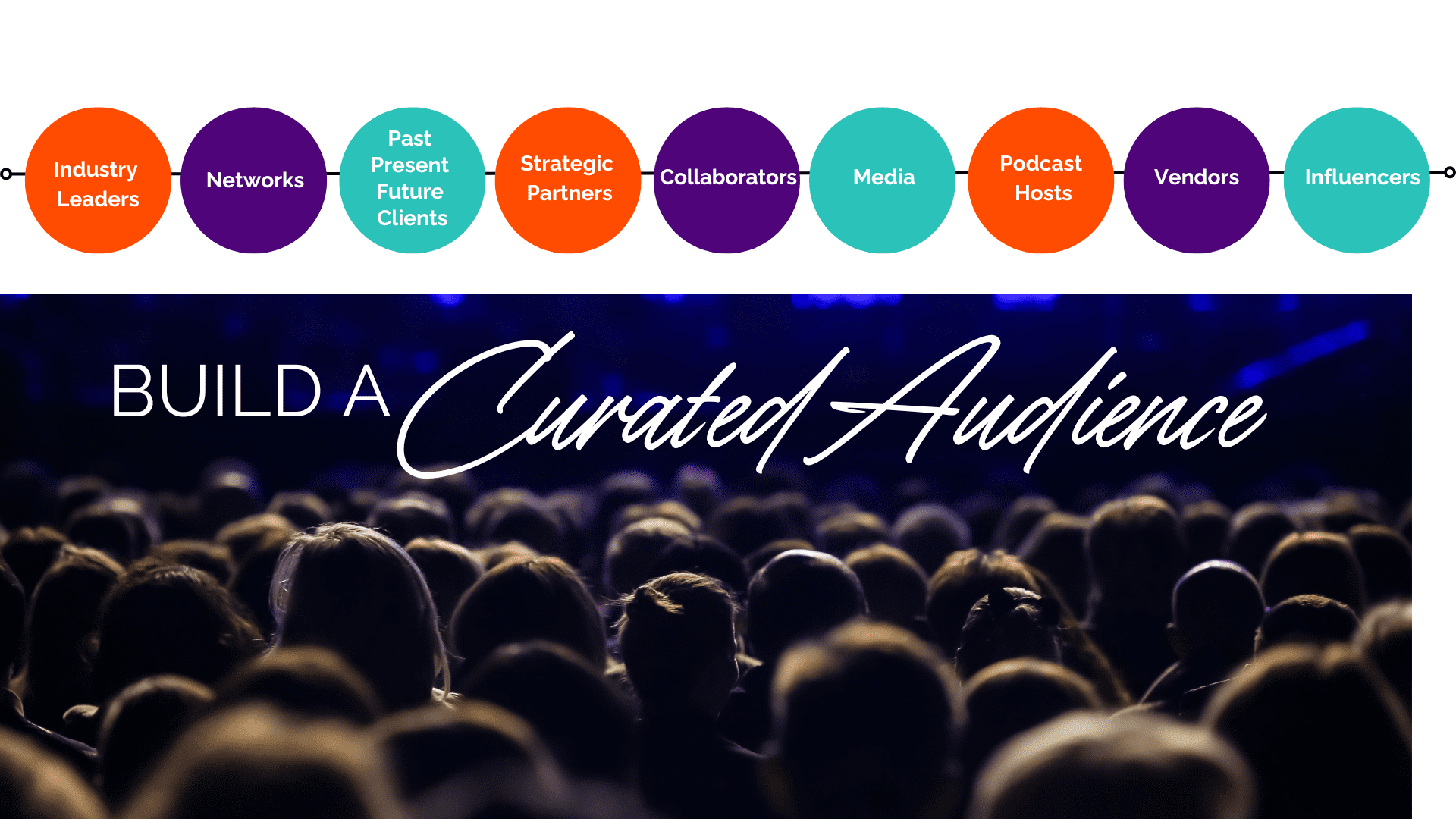
Think about building a curated audience that may include:
- Past clients who remember your work
- Current clients who are living the transformation
- Vendors who serve the same people you do
- Media outlets that cover what you care about
- Podcast hosts whose listeners are on similar journeys
- Event planners who curate the communities you want to connect with
- Strategic partners who understand your value
- The lurkers who will never buy from you but love what you do and refer you without you ever knowing
- Small communities, neighbors, and family who witness your work
- Industry leaders who set the direction
- Authors and speakers who shape the conversation
They’re all over the place. They’re all part of your ecosystem.
And the most valuable ones? Often, the ones who never become clients but become champions of your work.
Think about how your network could grow if you nurtured relationships with people from these various avenues without trying to sell them anything.
Beyond Demographics: The Valuegraphics Difference
This is where David Allison’s work on Valuegraphics becomes essential.
Demographics tell you almost nothing useful. Women over 50. Executives leaving corporate. Six-figure earners.
So what?
People of different ages, genders, and geographical locations can all care about the same things. What people care about—what they value—is what drives their decisions. This is what they feel before they can see or hear you.
When you can show that you have aligned values and communicate it through your content, your relationships, how you show up… THIS is what draws people to you.
It’s under the surface. It doesn’t always fit into a spreadsheet. But when you understand the power of building your foundation on knowing your story, your values, and the stories and values of those you want to connect with, everything else starts to fall into place. The marketing work you once hated now becomes easy, because you are simply showing up as you.
The Work No One Wants to Do
I’ve been teaching this for years, and I quickly realized that as you start to do the research, you need someplace to park it, or it becomes noise in your business. So I created a simple way to do this, it’s a spreadsheet that I call a Brain Trust, an advisory board of sorts. Each tab represents another piece of the work: keywords, podcasts you want to pitch, books you want to read, and authors you want to connect with. It’s up to you.
But here is what I know: whether you create a Brain Trust, a Notion page, or use a project management tool, it doesn’t matter—but you must start gathering what you find. Create a systematic way of gathering intelligence about your audience that goes far deeper than surface-level research.
You listen. Everywhere.
Not just on social media. You listen:
- To the podcasts they share
- To the media they engage with
- To the events they attend
- To the hashtags they use (the campfires that hold conversations)
- To what they get excited about
- To what makes them angry
- To what touches their hearts
- To the books they recommend
- To the causes they support
Every one of these data points is intelligence. Not for manipulation, but for connection. For understanding where they are on their journey so you can show up as the guide they need.
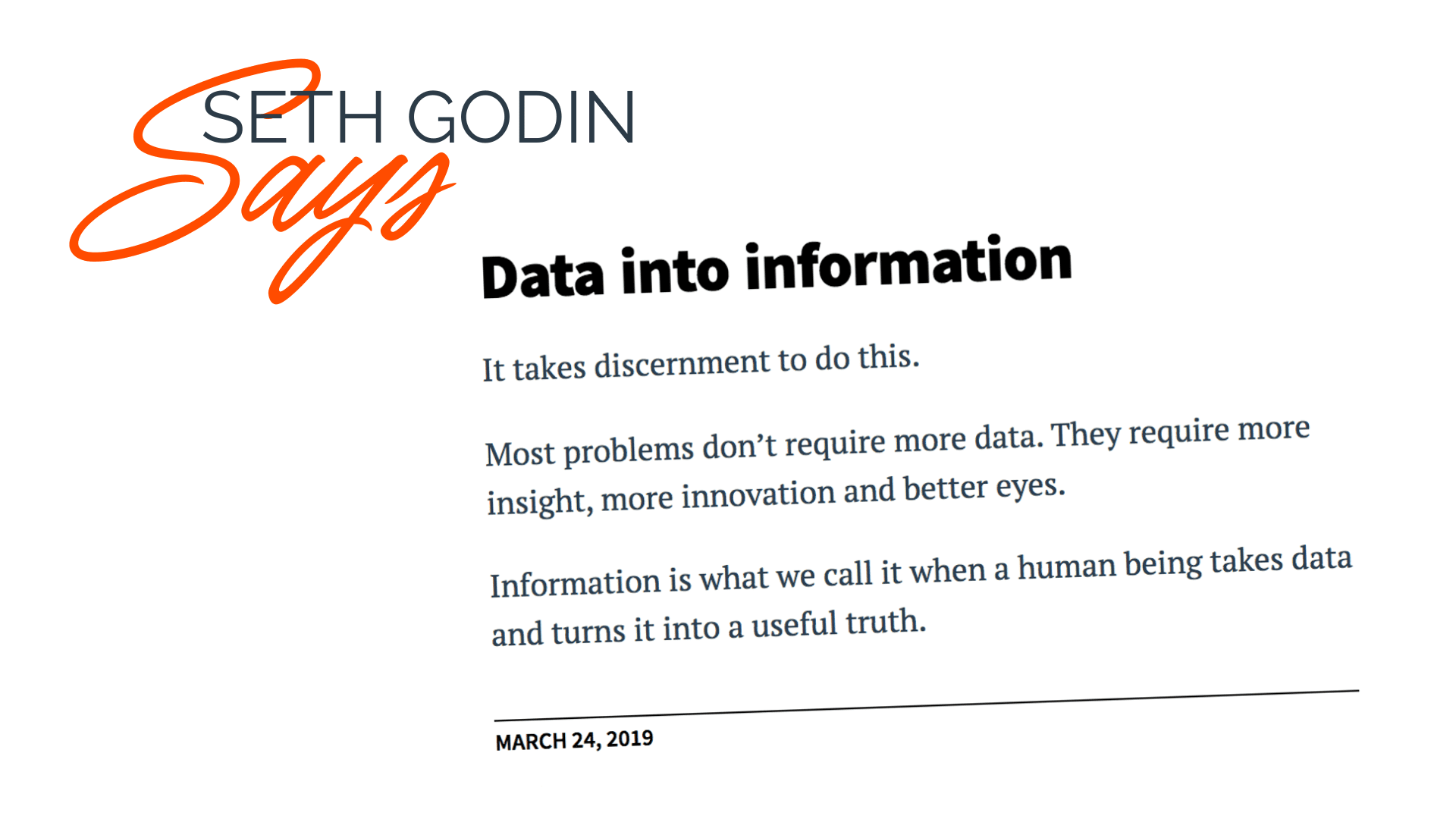
This takes time. It requires paying attention. It demands that you care more about genuine connection than quick conversions.
Most people won’t do it. They want the template. The swipe file. The proven formula.
But you know what? Those are the people still wondering why their “visibility strategy” isn’t working.
Build a Foundation That Lasts
Here’s something I don’t talk about enough: this work lasts.
Regardless of how fast technology moves, which platform is hot this month, or what AI will do next.
When you build your strategic visibility on deep understanding of your audience—who they are, what they value, where they are on their journey—you create a foundation that moves with you.
This becomes more relevant than ever as we step into our third act. Likely our last act.
We need to build something sustainable. Something that will support us for as long as we choose to work that is flexible and lights us up. We MUST use every bit of what we know and what we’ve learned along the way.
Not something dependent on the latest platform or trend or hack.
Something built on what’s actually true: real people on real journeys who need guides who’ve already been there and have returned with the stories and the wisdom to lead.
Here’s what this looks like in practice:
I wrote this series on LinkedIn. I poured my heart and soul into each article, refining the thinking I’ve developed over years of work. And because LinkedIn changed its algorithm—specifically in ways that suppress women’s voices—very few people saw them.
I wasn’t OK with that.
So I did exactly what I teach: I took the work I’d already done and built with it. These articles became pillar content for my website, improving my SEO and creating a meaningful experience for readers who find me through search. They became the launch content for The Intentional Visibility Project on Substack, giving me weeks of valuable material to grow a new audience where I have more control over visibility.
The foundation was already built. Moving it to platforms I own didn’t require starting over; it required strategic repurposing.
That doesn’t change when LinkedIn (or Instagram, or any platform) changes its algorithm. That doesn’t disappear when a new platform launches. Most importantly, it doesn’t require you to start over when technology shifts.
It’s the foundation you can build upon, layer by layer, for as long as you want to do this work.
Coming Home to Your Audience
Here’s what happens when you go deep instead of wide:
You start to see patterns. You notice what your audience values aligns with what you value. You discover they’re reading the same books, listening to the same podcasts, attending the same types of events.
This is also where AI can really help—recognizing patterns is what it does really well. While others are out seeking that one-button solution that creates a month of content in 10 minutes, go in the other direction and learn how to drive these tools. Team up with them and create work that is better, where every exchange makes you sharper.
You realize the media outlets they trust are the ones you should be pitching. The podcast hosts they listen to are the ones whose audiences need to hear from you. The events they attend are where you should be speaking.
Suddenly, strategic visibility isn’t about being everywhere. It’s about being in the right places, speaking to people who are already on a journey you understand because you’ve been on it.
Your content becomes the map for where they’re going. Your story becomes the evidence that the journey is possible. Your intentional visibility becomes the breadcrumbs that help them find their way home to their own body of work.
Where to Start
If you’re ready to do this work, the deep, foundational work that most people skip, start with listening.
Pick one person who represents your audience. Not a demographic. A real person.
Then ask yourself:
- Where are they on their hero’s journey right now?
- What transformation are they seeking?
- What do they value most?
- Where do they show up online and offline?
- What media do they consume?
- What communities do they belong to?
- What keeps them up at night?
- What lights them up?
Don’t rush this. Don’t template it. Don’t delegate it to a person or an AI tool.
This is the work that makes everything else easier and possible.
This is how you architect strategic visibility that matches the significance of your work.
This is how you come home with your story and help your audience come home with theirs.
This is Part 3 of The Intentional Visibility Project, an 8-part series exploring the strategic architecture of lasting visibility for accomplished women over 50.
Previously: The Architecture of Visibility: Building a Foundation That Lasts — Part 2
Next in the series: Connecting the Dots: How Strategy Becomes Your Compass — Part 4, where we explore how deep audience understanding guides every strategic decision.
Donna Cravotta is founder of Cravotta Media Group, host of The Real 50 Over 50 livestream, and creator of BeVisible.club. She guides accomplished entrepreneurial women 50+ as they architect strategic visibility that matches the significance of their work.
Newsletter | The Real 50 Over 50 | The Intentional Visibility Project on Substack

0 Comments