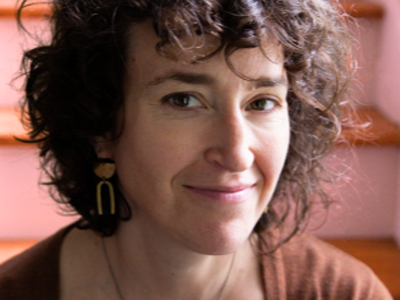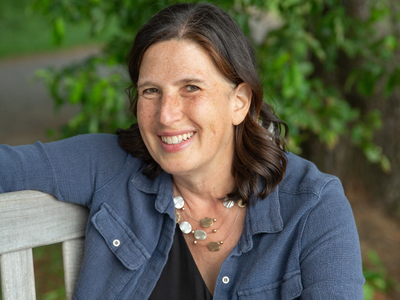
Erin Rogers – 53
Executive & Leadership Coach/Consultant, founder of ERA Collective


About me
Erin Rogers is the founder of ERA Collective, an executive coaching and leadership development consultancy she launched in 2024 after a 25-year corporate career. As Director of Brand, Marketing and Communications at EY Canada and Country Head of Marketing at HSBC Canada, Erin spent two decades helping organizations navigate growth, change, and transformation — including major acquisitions where she led the human side of integration. Today, she works with mid-to-senior leaders — particularly women — on the work of becoming more visible, more influential, and more themselves. An ICF-certified coach (ACC), Erin is known for her signature Accelerating Your Personal Brand workshop, which she has delivered for over a decade across financial and professional services firms. She lives in Toronto with her husband Brad and their three daughters.
What do you do and why do you do it?
I coach senior leaders — especially women — who are in the messy, exciting middle of their careers. The ones who’ve built real expertise and real credibility, and who now have to figure out how to be seen, heard, and trusted at a different level.
I do this because, after 25 years inside large organizations, I watched too many brilliant women hit a ceiling not for lack of skill, but because the system rewarded a kind of visibility they’d been taught to avoid.
ERA Collective is my answer to that. We do individual executive coaching, group coaching programmes for organizations, and fractional CMO and advisory work — but underneath all of it is one belief: leadership is a practice of becoming more yourself, not less.
That’s the difference I want to make. I want women to stop apologizing for taking up space. And I want organizations to stop losing extraordinary leaders because they couldn’t see them clearly.
What changed for you after age 50?
Menopause came for me at 41 — though I didn’t know that’s what it was for over a decade.
I’d just had my third daughter. The night sweats started. I’d wake at 4 or 5 a.m. and not get back to sleep. For ten-plus years I told myself it was just the life I was building — a big job, three kids, a husband, a household — and I just had to push through. What I didn’t know was that I was in active perimenopause the entire time. Ten years of running on less than five hours of sleep a night, exhausted, foggy, off-kilter, suffering in silence because no one had given me the language for what was happening to me.
The moment that broke me open was on a stage. I was presenting to a hundred people in the room and two thousand more on Zoom, my boss next to me, when my first real hot flash hit. I lost the thread of my own presentation. My face went what I can only call “glazed donut.” It was terrifying. And in the months after, I started to shrink. I avoided public speaking. I stopped chairing meetings. I tried to hide from my team. I’m in marketing — which I’d long been told was a young person’s game — and I was sure I was being found out.
What turned it around was a phone call. World Menopause Day, just over a year ago. My boss called me — randomly, no agenda — and asked, “how are you?” And for the first time, at work, I told someone the truth. He listened. He told me about his wife. He said: you’re not shrinking, you’re doing amazing. If you need anything, I’ve got you. That was the moment I stopped being ashamed.
Since then, I’ve been channeling the anger. Anger that we suffer in silence. Anger that my benefits cover none of the medication that gets me through. Anger that the bloodwork I need to manage this constantly isn’t covered either. Anger that the research is decades behind where it should be — because if this happened to men, it would have been solved fifty years ago. I tell every younger woman I meet to get her bloodwork done in her early forties so she has a baseline. I’m building coaching support for women going through this transition at work. I’m educating the men in my life about what we’re actually dealing with — and naming the men, like that boss, who have made it safe for me to talk about it.
50 didn’t slow me down. It clarified me. And it made me angry on behalf of every woman who’s still suffering quietly because she doesn’t have the words for what’s happening to her body, her mind, and her career.
What would you tell the 20 or 30-year-old YOU?
You’re not going to figure it all out, and that’s not the point. Stop performing certainty.
The work that mattered most in my career didn’t come from having a perfect plan — it came from being curious, building real relationships, and staying long enough in hard things to actually learn from them.
And — ask for what you want. Out loud. The number of times I waited to be chosen instead of choosing myself is something I still think about. Your career is not a meritocracy where the right person notices you at the right moment. You have to put your hand up. You have to say the thing.
Also: the people you’re spending time with right now? Some of them will become the most important relationships of your professional life. Take that seriously.
What do you think you’ll tell yourself in retrospect at the end of your life?
I think I’d say: it was always the people.
The teams I led. The daughters I raised. The women I coached. The friendships I kept across decades and continents. The titles and the wins will matter much less than I imagined they would when I was thirty.
And: be braver earlier. Whatever you’re afraid to say, say it sooner. Whatever you’re waiting to start, start now. The runway is shorter than you think and longer than you fear, all at the same time.
What impact do you think increased visibility can have on your business?
For my business, visibility is foundational. Coaching is a trust business — people work with me because they believe I understand something about their experience that others don’t, and because they want to do the kind of work I do. Podcasts, articles, the writing I publish through ERA Insights, conversations like this one — they’re how I demonstrate that, at scale.
ERA Collective is still relatively young. Every additional point of visibility shortens the runway between someone hearing my name and someone trusting me with their hardest leadership moments. It also opens doors to the kind of work I most want to do — enterprise group coaching programmes, fractional advisory engagements, partnerships with organizations who want to develop their senior women. Visibility is also how I find my people. The right clients tend to recognize themselves in my work before they ever fill out a contact form.
Who or what inspires you and why?
My daughter Ryan.
Ryan has walked through a cancer journey that no kid should have to walk through, and she has come out of it with a clarity about who she is and what she wants to do with her life that most adults never find. She’s going to nursing school — choosing, of her own free will, to walk back into the world of hospitals and patients and hard moments, because she wants to be the person for someone else that other people were for her.
Watching her has rewired me. About what courage actually looks like — it’s quiet, mostly. About what matters and what really doesn’t. About how much steadier kids can be than the adults around them when the ground falls away beneath everyone’s feet.
Whatever I think I’ve built in my career doesn’t come close to who Ryan already is. She’s the person I most want to be like when I grow up.
Something else I’d like to share
The signature workshop. Accelerating Your Personal Brand has been delivered for 12+ years inside financial and professional services firms. It’s the work that put visibility on the table for hundreds of leaders before ERA Collective was even a possibility.
The transition lens. Much of your corporate work — at EY through acquisitions, at HSBC during the transition to RBC — was about leading people through change. That experience now shapes how you coach leaders who are themselves in transition.
Why women, why now. You also coach men as allies, but your core focus on mid-to-senior women leaders is intentional. The leadership pipeline is leaking at exactly the level you work — and the women who do break through are often the ones who learned, late, what you now teach early.
ERA Insights. A growing platform of original writing from senior women leaders. A way of practicing what you preach about visibility — making other women’s voices, not just your own, more findable.